
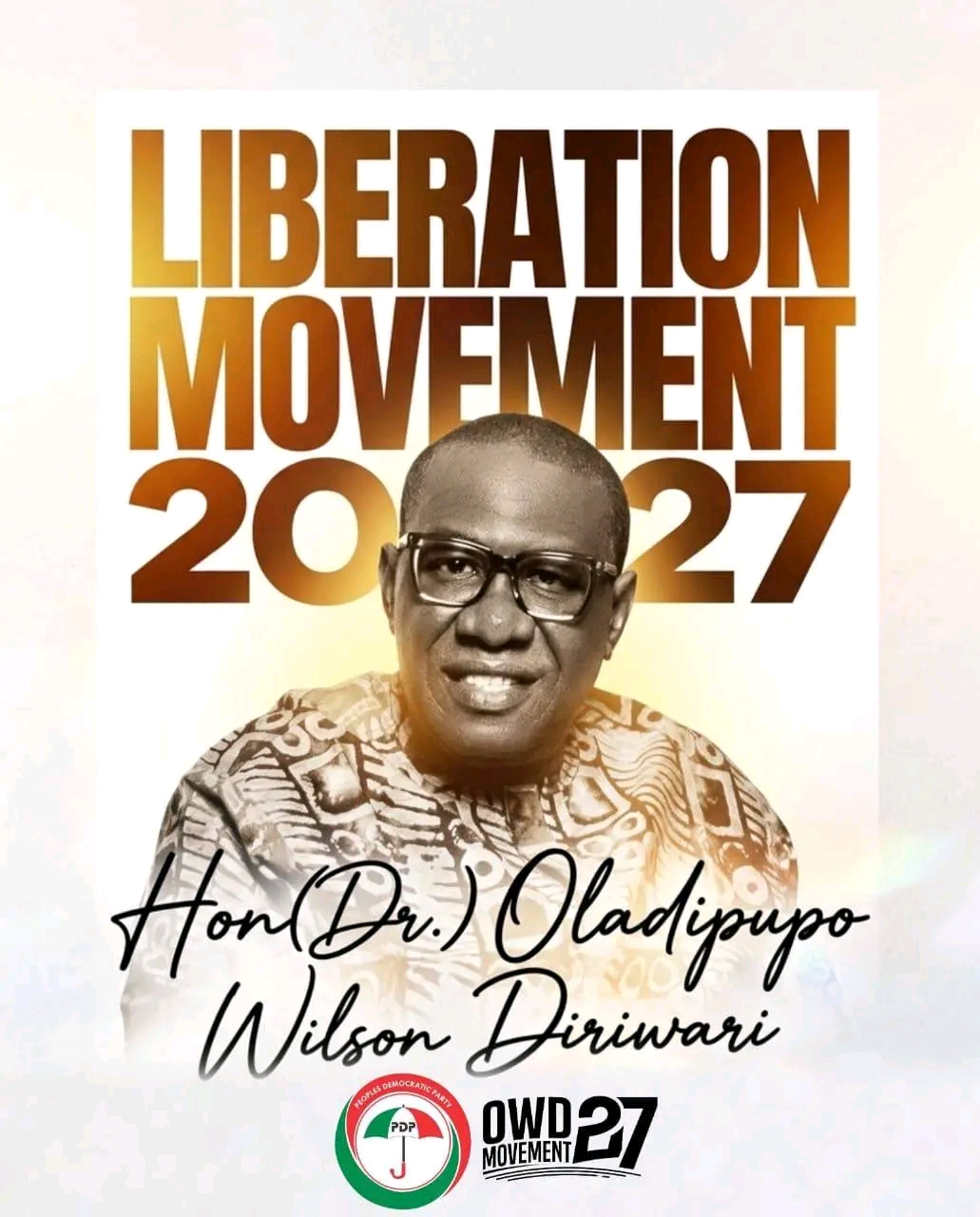
AJEGUNLE DID NOT JUST RAISE HIM. IT TAUGHT HIM.
There is a difference between knowing a place and being formed by a place.
You can visit a community, attend its meetings, speak its language and even campaign through its streets without truly understanding what its people carry.
But when a place is your childhood classroom, its struggles can become part of your education.
That is the second chapter of the Dr. Oladipupo Wilson Diriwari story.
Ajegunle was not merely where he lived. It was part of what made him.
Ajeromi-Ifelodun is one of Lagos’s densely populated urban constituencies, with Ajegunle at its cultural and commercial heart. The area has produced remarkable talent in music, football and entrepreneurship, even while confronting the pressures that come with intense urban density and limited space.
This creates an interesting paradox.
How can a place with so much talent continue to struggle to convert talent into sustainable prosperity?
That question is bigger than one politician.
It is a question about the architecture of opportunity.
For decades, Ajegunle has been associated with raw talent: young people who can sing, play football, trade, build businesses, repair machines, create fashion, master technology and survive circumstances that would defeat many others.
But talent without opportunity can become frustration.
Ambition without access can become desperation.
Education without employment can become disappointment.
And a young person with ability but without a pathway can eventually begin to believe that his environment has already decided his future.
This is where the conversation about representation becomes important.
A legislator cannot personally solve every problem in a constituency.
But a serious representative can identify problems, influence legislation, pursue oversight, attract attention to neglected communities and connect constituents to opportunities.
That distinction matters.
Dr. Diriwari’s own interventions in education provide one example of the philosophy that has accompanied his public activities. In April 2026, The Nation reported that he supported students in Ajeromi-Ifelodun with JAMB registration and had previously supported WAEC and GCE registration for young people. Nigerian Tribune also reported the distribution of JAMB registration forms to indigent students in the constituency.
But the deeper question is not simply:
“How many forms were distributed?”
The deeper question is:
“What happens to the child after the form?”
That is where politics must mature.
A JAMB form can open a door.
Education can change a life.
But a functioning economy must eventually provide somewhere for that educated young person to stand.
This is why the future of Ajeromi cannot be reduced to periodic gifts.
The real conversation should be about capacity.
How do we help the trader expand?
How does the artisan acquire modern skills?
How does the young graduate gain access to opportunity?
How does the talented footballer move from the dusty field to a professional pathway?
How does the young woman with a business idea obtain the knowledge, finance and market access to grow?
How does Ajegunle turn its extraordinary human energy into measurable economic value?
These are the questions that should occupy anyone seeking to represent the constituency.
And perhaps this is one reason Dr. Diriwari’s story deserves examination beyond political slogans.
He knows the community from the inside.
He has also spent decades acquiring professional experience outside it.
The challenge is whether that combination of grassroots familiarity and professional exposure can translate into effective public representation.
That is not something supporters should answer for the people.
It is something the people should examine for themselves.
Because ultimately, Ajeromi-Ifelodun does not need someone merely to speak about Ajegunle.
It needs people who understand that behind every street name is a human story.
Behind every market stall is a family.
Behind every school desk is a future.
Behind every unemployed graduate is a wasted possibility.
And behind every talented child is a question:
Will society give this child a ladder, or merely applaud the height of the wall?
Perhaps that is the real political conversation.
Not:
“Who is making the loudest promises?”
But:
“Who understands the problem deeply enough to help build the ladder?”
The next chapter continues.
DAY 2 OF 60
The place that raised the man.