
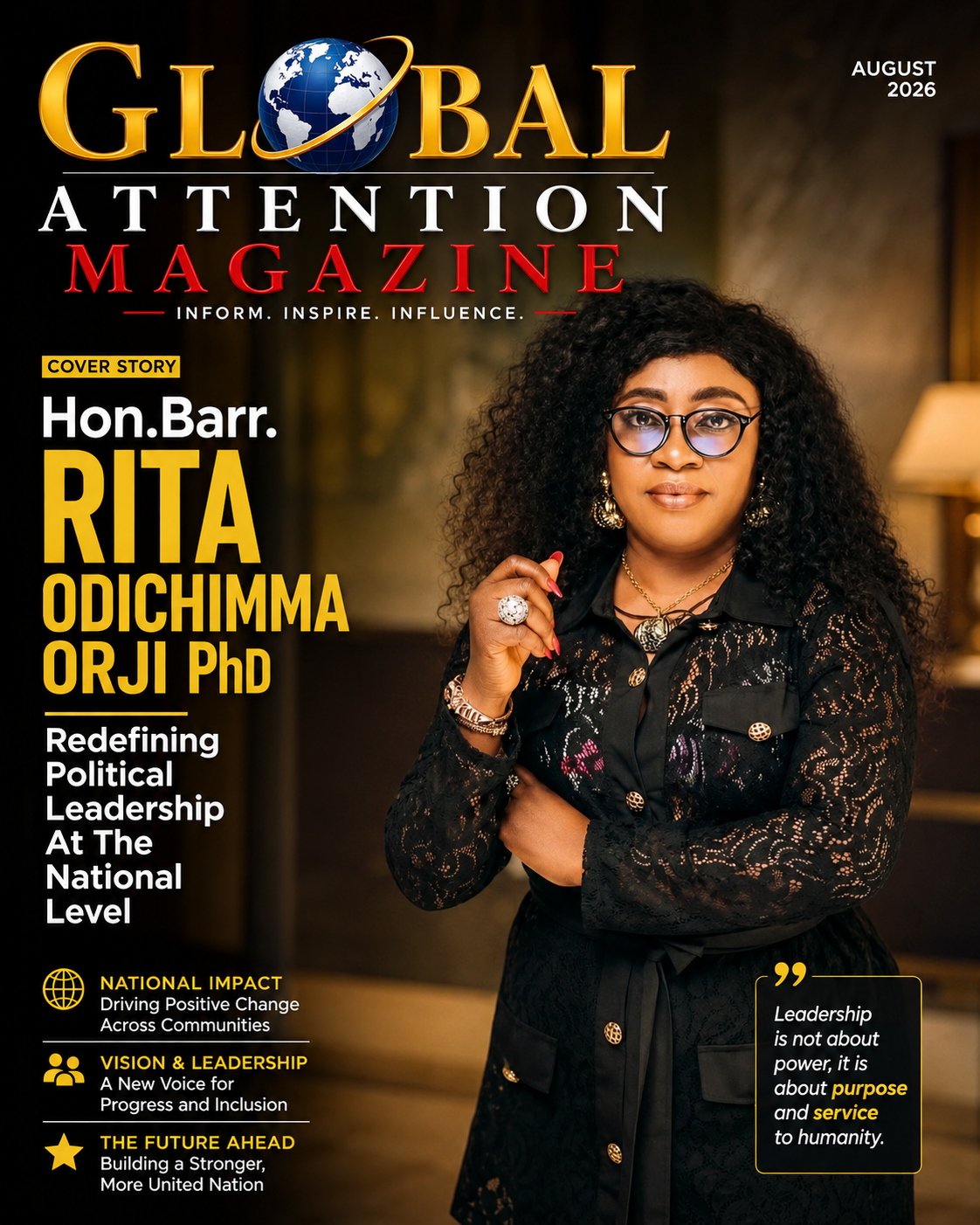
Hon. Barr. Rita Odichimma Orji represents a model of political leadership built around representation, legislative engagement, courage, and public accountability. Her experience as a former member of the Nigerian House of Representatives, representing Ajeromi-Ifelodun Federal Constituency of Lagos State during the 8th National Assembly, provides a useful lens through which to examine the evolving role of political leadership in Nigeria.
From representation to responsibility
At the heart of effective political leadership is the understanding that public office is not personal property but a mandate entrusted by the people. Orji has publicly described political office as an assignment given by the electorate, emphasizing that the people ultimately determine who represents them.
This philosophy challenges the traditional perception of politics as merely a competition for positions. Instead, it presents leadership as a responsibility to listen, legislate, advocate, and remain connected to the people.
Legislative leadership with national relevance
During her time in the House of Representatives, Orji was associated with legislative initiatives and national policy debates. A National Assembly research publication lists her as chair of the House Committee on Diaspora Matters during the 8th Assembly.
Official parliamentary records also show her involvement in matters of national concern, including legislation and urgent public-interest issues. For example, she sponsored a motion concerning deaths associated with abuse of the painkiller Tramadol.
Her legislative record illustrates an important dimension of national leadership: bringing constituency experiences into national policymaking.
A voice for stronger institutions
Another defining feature of Orji’s political outlook has been her emphasis on the proper functioning of democratic institutions. In interviews after leaving the House, she argued that legislators must remember that their primary responsibility is to their constituents and expressed concern about excessive executive influence over other arms of government.
This perspective speaks directly to one of Nigeria’s central democratic challenges: building institutions that are strong enough to serve citizens irrespective of political party, personality or administration.
Championing women’s participation
Redefining political leadership also requires expanding the space available to women. Orji has spoken about the barriers women face in Nigerian politics, including electoral violence, which she identified as a major factor discouraging women’s participation.
Her political journey therefore carries significance beyond her individual career. It contributes to the wider conversation about women’s representation, political inclusion and equal access to leadership opportunities.
Leadership beyond party politics
National leadership requires the ability to think beyond immediate partisan interests. The Nigerian political environment needs leaders who can combine political loyalty with independent judgment, defend democratic institutions and place national development above personal ambition.
Orji’s experience in parliament demonstrates why political leadership should increasingly be evaluated by ideas, legislative contributions, accountability, and measurable impact, rather than simply by titles or political prominence.
A new definition of political leadership
The emerging definition of political leadership in Nigeria should be built on five principles:
People first: public office must remain a service to citizens.
Legislation with impact: laws and policies should address real social and economic problems.
Institutional accountability:y democratic institutions must maintain their constitutional responsibilities.
Inclusive leadership: women and other underrepresented groups must have meaningful opportunities to participate.
Courage and integrity — leaders must be prepared to speak truthfully about national challenges, even when doing so is politically uncomfortable.
Hon. Barr. Rita Odichimma Orji, PhD, can therefore be presented as part of a generation of Nigerian political actors redefining leadership from the traditional pursuit of political office toward the broader ideals of representation, legislation, inclusion and institutional responsibility.
Her journey from professional life to the National Assembly and continued engagement with Nigeria’s political development offers an important reminder that political leadership is not measured merely by the office one occupies, but by the ideas one advances, the people one represents, and the institutions one helps strengthen.
In a Nigeria seeking stronger democratic institutions and more responsive governance, the real challenge is to build a political culture where leadership becomes service, representation becomes responsibility, and political influence becomes an instrument for national development.